 Seabook
Every dive, numbered and in order.
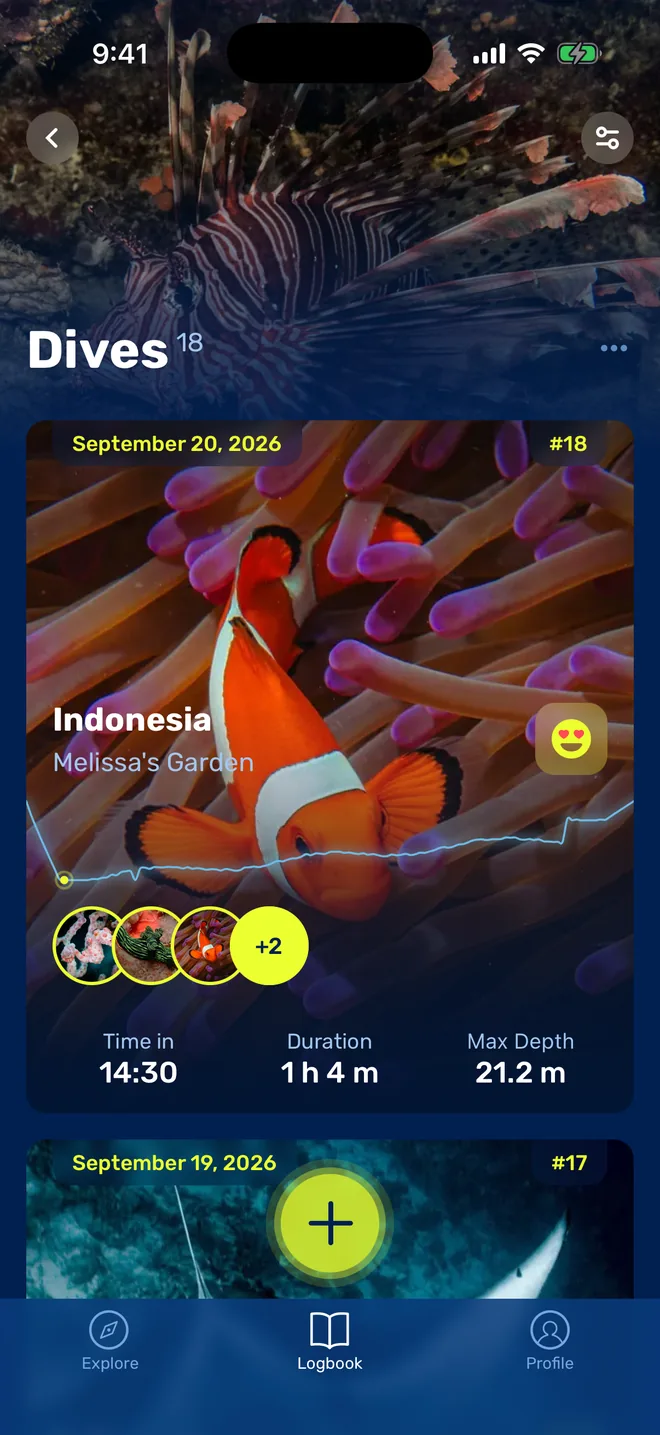
Your dives sit in one scrollable logbook with the date, site, time in, duration and maximum depth on each card. Filter by place or year when the list gets long.

Log depth, time, gas and site, add the species you met, and import from your dive computer. Free on iPhone and Android.
Get the app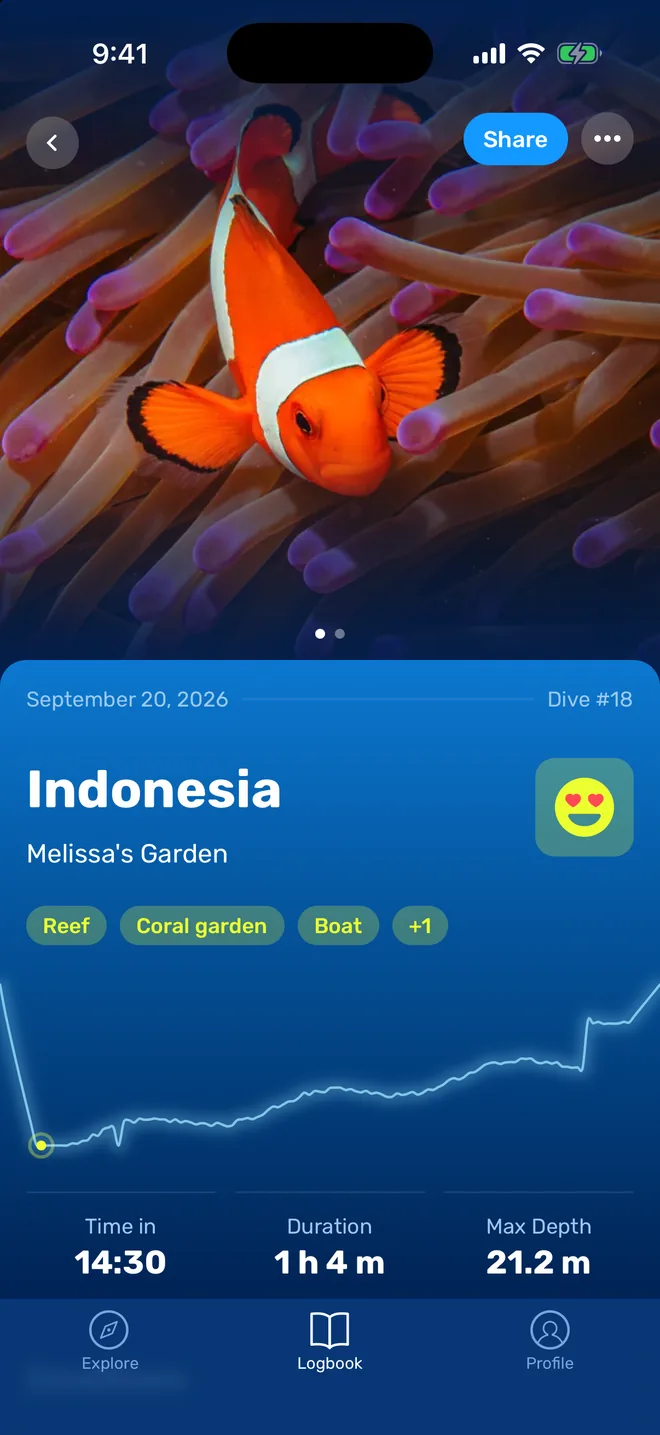
A dive log entry in Seabook holds the numbers, the place and the animals. Here is what a single dive looks like.
Your dives sit in one scrollable logbook with the date, site, time in, duration and maximum depth on each card. Filter by place or year when the list gets long.
Import a dive from your computer and the depth curve comes with it, so you can see the descent, the safety stop and everything between.
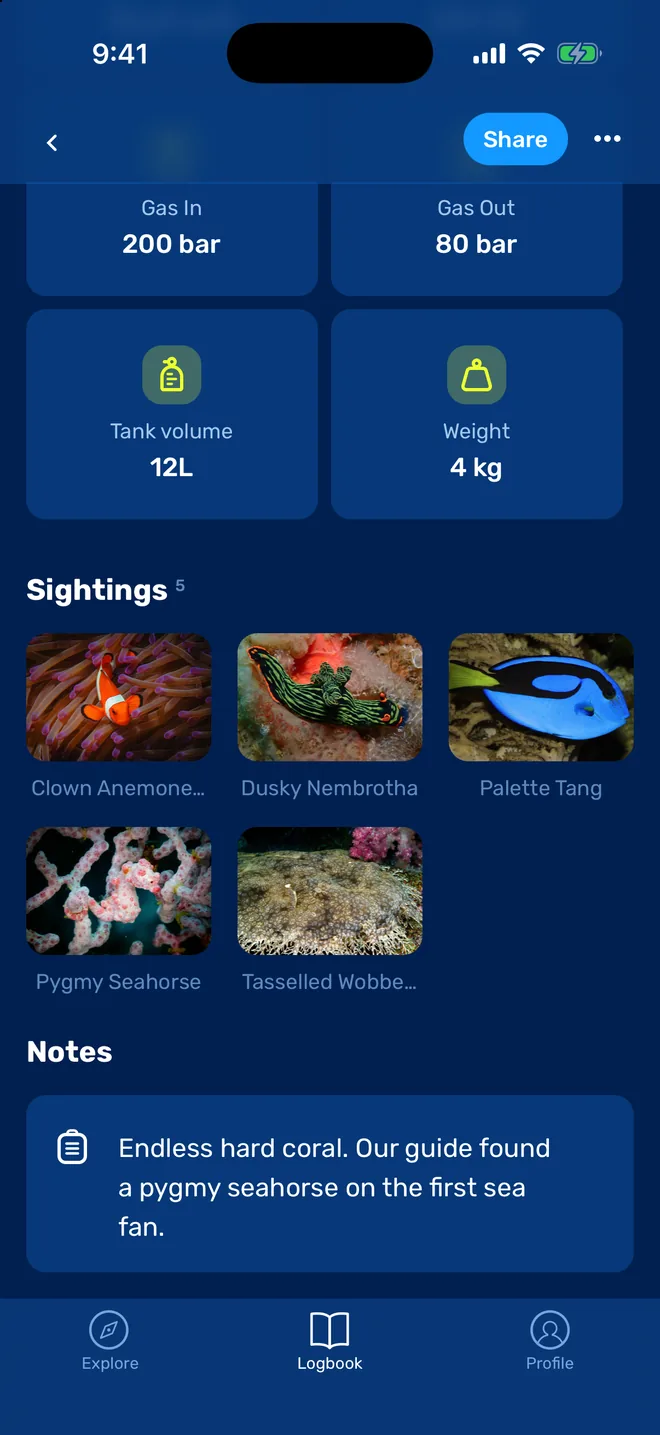
Pick species from a guide of more than 1,700 marine animals, or identify one from your photo. Each sighting stays linked to the dive it happened on.
Open a region to see its dive sites, water temperature and the species divers meet there most often. Tick them off as your own log grows.
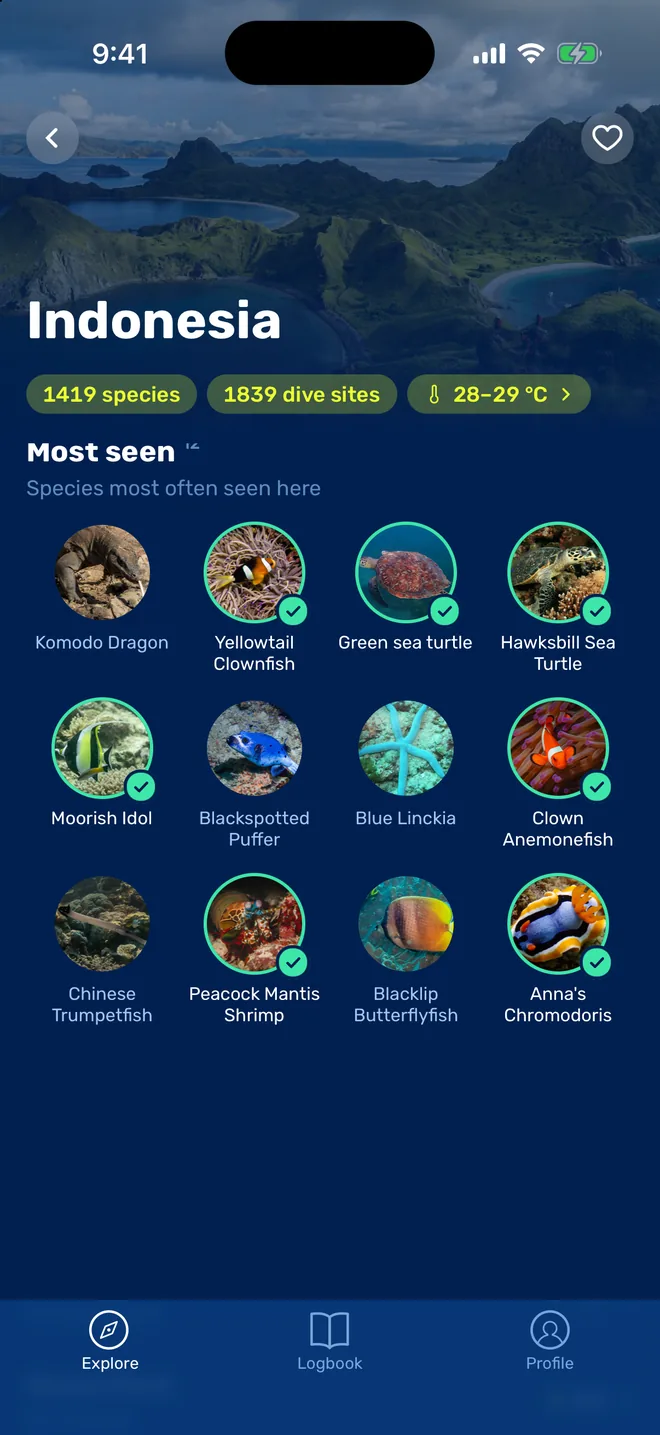
The basics every logbook has, plus the fields you will thank yourself for on the next trip.
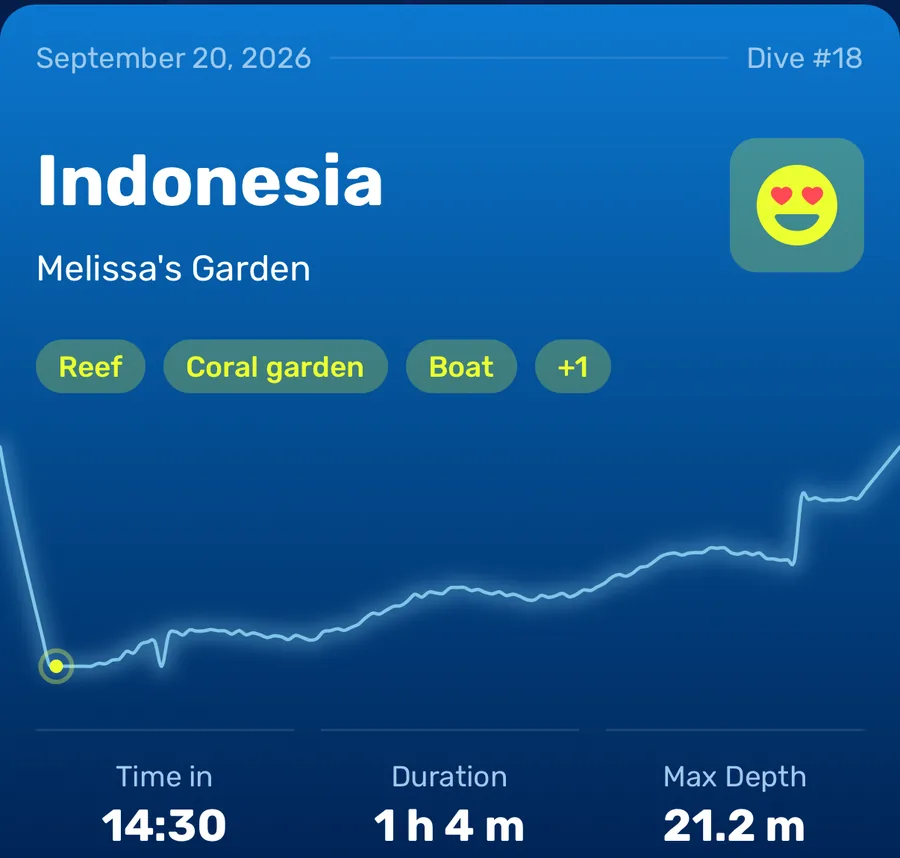
Time in, duration, maximum depth and the dive site, with tags for the kind of dive: reef, boat, night, drift.
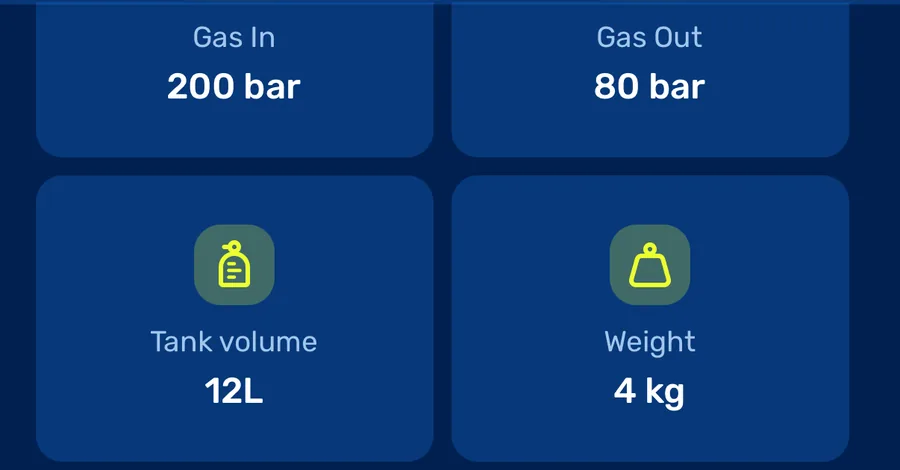
Start and end pressure, tank size and the lead you carried.

Conditions, buddy, the thing you want to remember.
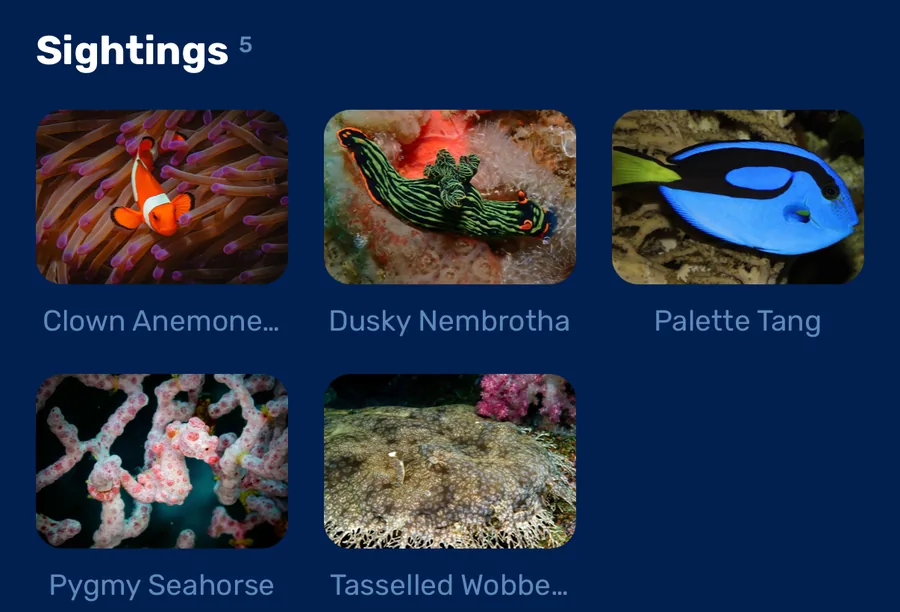
Every animal you logged, with a photo and a link to its guide page.
Pair your computer over Bluetooth, on iPhone or Android, and Seabook pulls the dives in with their depth profile. Next time it imports only the new ones.
Plenty of divers keep both: paper for the stamps, the app for everything they want to find again.
More detail in the scuba dive log guide.
A dive log is the record of each dive you make: where and when you dived, how deep and how long, the gas you used and what you saw. Divers keep one to track experience, plan weights and gas for the next dive, and show their dive count to dive centres and instructors.
At minimum: date, dive site, maximum depth, dive time, and start and end tank pressure. Most divers also add tank size, weight carried, water temperature, visibility, buddy, and notes on what went well. In Seabook you can also attach the species you saw on the dive.
Seabook imports dives over Bluetooth from 108 models made by 20 brands, including Suunto, Shearwater, Mares, Scubapro, Cressi, Oceanic, Aqualung, Ratio and Divesoft. It works on both iPhone and Android.
Dive centres generally care about your dive count and recent experience, and a digital log shows both. Some courses still ask for an instructor signature or a stamp, so check with your instructor before a course and keep paper pages for those dives if needed.
Yes. Add past dives by hand with their original date, site, depth and time, so your full history sits in one place next to the dives your computer imports.
Yes. Logging dives is free on iPhone and Android. Some extras, such as Offline Mode, are paid.
Dive logging is free on iPhone and Android. Your first dive takes about a minute.